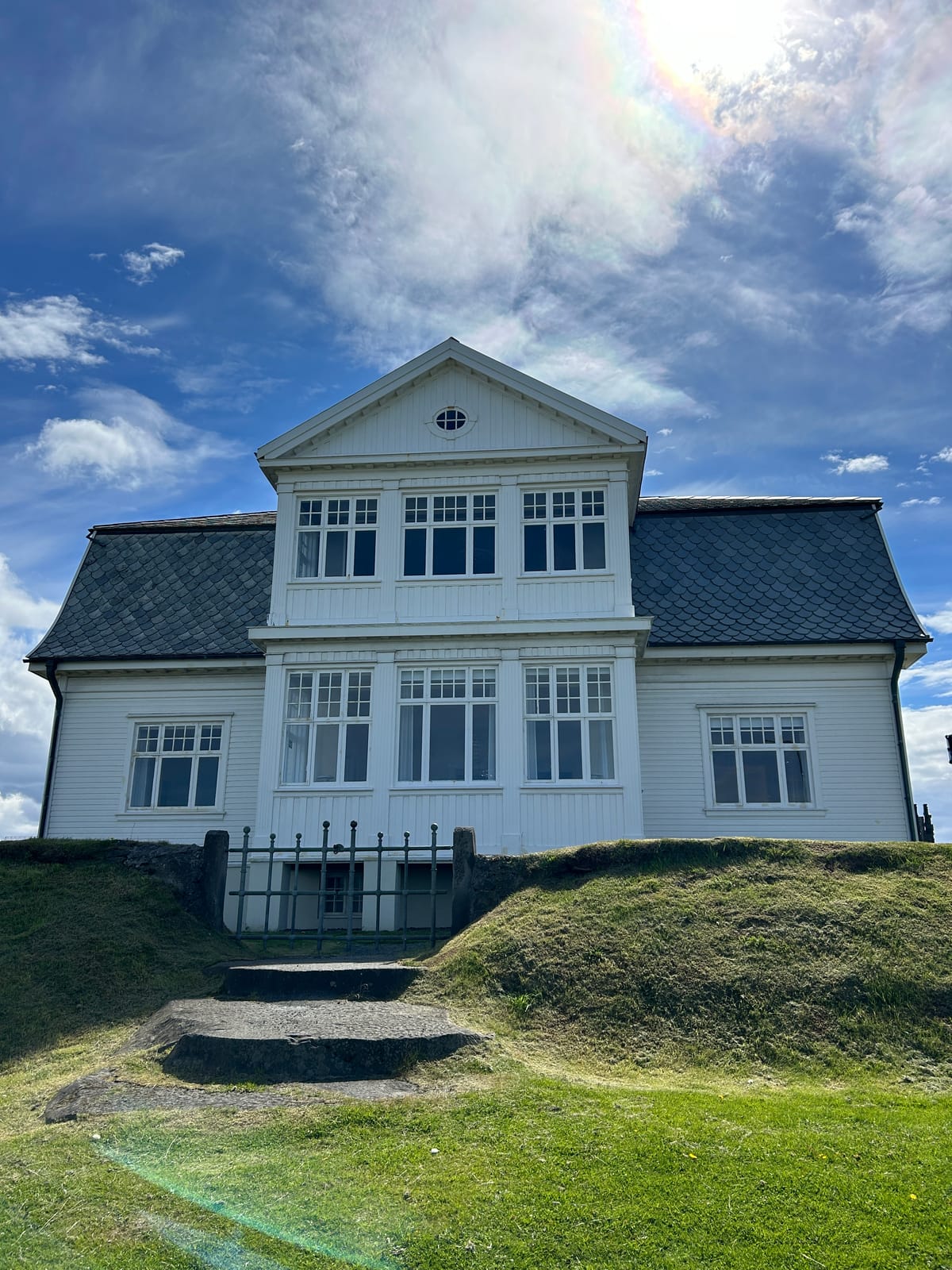
On the north shore of Reykjavík, a little apart from everything, a white timber house stands on its own patch of grass and looks out at the bay with Mount Esja on the far side. It is pale and prim and slightly formal, the kind of house that seems to be keeping a secret, and for a building its size it has held more history than most.
For two days in October 1986, this is where Ronald Reagan and Mikhail Gorbachev sat down together. The talks ended without an agreement and were called a failure at the time, and yet almost everyone now looks back on those two days in this house as the moment the Cold War began to come apart in a good way. Inside, the American and Soviet flags hang crossed to mark it.
The house is older and odder than that summit. It was put up in 1909, built in Norway, shipped across the sea in pieces and assembled here for the French consul. For a dozen years it was the home of the poet Einar Benediktsson, whose statue now stands not far away, and in 1958 the city bought it and turned it into a place for receptions and official welcomes.
It is also, by long tradition, haunted. The resident ghost is known as the White Lady, and a former British ambassador found her presence unsettling enough that he persuaded Britain to sell the house and move on. The Foreign Ministry has even put it on the record, with the lovely careful line that it will neither confirm nor deny that Höfði has a ghost.
You cannot usually go inside, and you do not need to. The photograph is the house itself, white and self-contained against the grey water with the mountain behind it. It stands a short walk along the shore from the Sun Voyager and the Partnership sculpture, so the three of them make one easy and rewarding loop on a clear day.
There is something fitting about sending a small white house where, for a moment, the world let its shoulders drop. Sign it with a few of your own words for someone you wish that same ease, and the picture carries more than it seems to.